
General Dentistry

Crowns vs. Veneers: Why Your Dentist Recommends One Over the Other
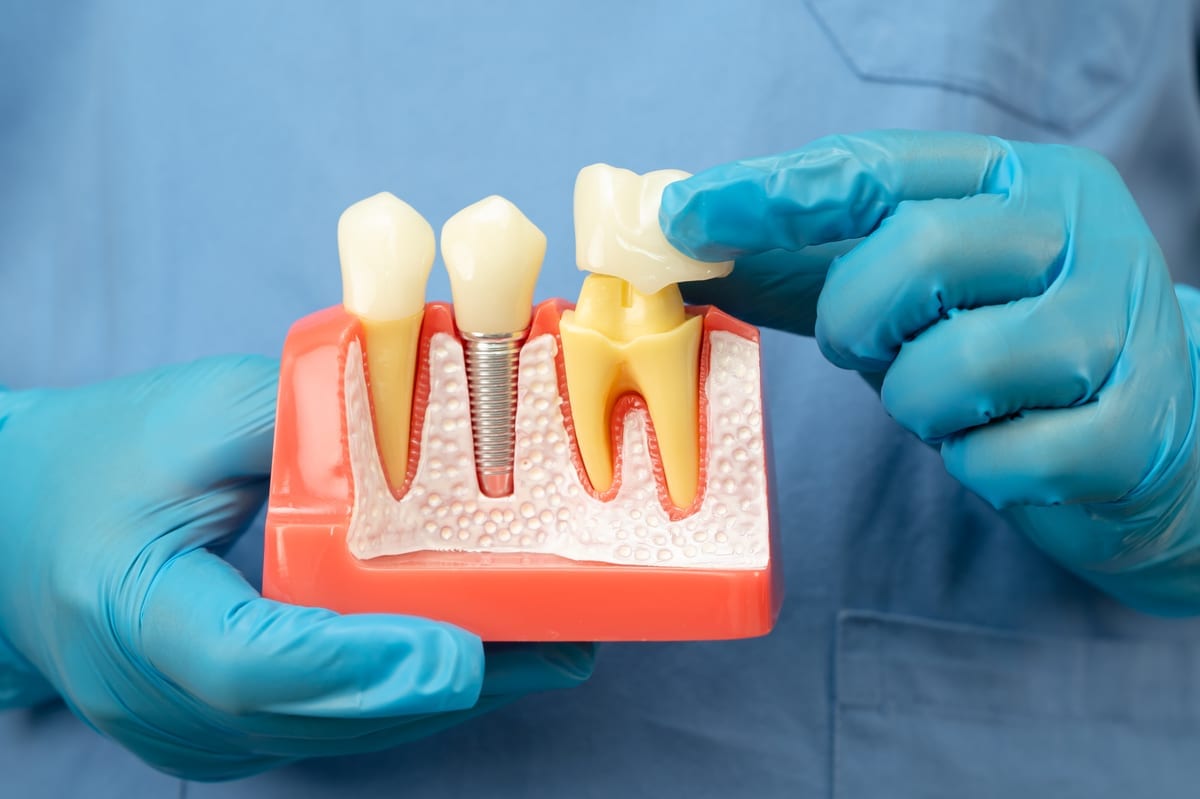
When a dentist says you need a crown or a veneer, patients often wonder why one and not the other. Understanding crowns vs. veneers — and why your dentist recommends one over the other in Alexandria — starts with knowing how each restoration works. Dr. Bella Nguyen at Carabella Dental of Alexandria helps patients understand the clinical reasoning behind every recommendation. This article breaks that reasoning down in plain language.
What Crowns and Veneers Actually Do
A dental crown is a full-coverage cap that fits over the entire visible portion of a tooth. It protects teeth that are cracked, severely decayed, or structurally compromised. Crowns are made from porcelain, ceramic, or metal, depending on the location and function of the tooth.
A veneer is a thin shell — typically porcelain — bonded only to the front surface of a tooth. It changes the color, shape, or size of a tooth without covering it completely. Veneers are most effective when the underlying tooth structure is still healthy and intact.
Both restorations fall under Cosmetic Dentistry Alexandria, but they serve very different clinical purposes. Choosing the wrong one can compromise both function and longevity.
When Your Dentist Chooses a Crown Over a Veneer
Crowns are the right choice when a tooth has significant structural damage. If a tooth is cracked below the gumline, heavily filled, or weakened by decay, a veneer cannot provide adequate support. The thin shell simply does not have enough surface area to reinforce a compromised tooth.
Your dentist will also recommend a crown after a root canal. Root canal-treated teeth become brittle over time and need full coverage to prevent fracture. A veneer on a post-root-canal tooth is a recipe for failure.
Here are the most common clinical reasons a dentist chooses a crown:
- Tooth is cracked or fractured significantly
- Large existing fillings leave little natural tooth structure
- Tooth has undergone root canal treatment
- Severe decay has compromised most of the tooth
- Tooth needs to anchor a dental bridge
Crowns also work as the visible cap for dental implants. When a patient is missing a tooth and an implant post has been placed, a crown restores the visible portion. This combination provides a result that looks and functions like a natural tooth.
When a Veneer Is the Better Clinical Choice
Veneers shine when the tooth is structurally sound but cosmetically imperfect. Stubborn staining that does not respond to whitening is a strong candidate for veneers. So are teeth with chips, minor cracks on the surface, or slight misalignment that does not require orthodontic correction.
Because veneers only cover the front surface, they require less tooth reduction than crowns. Your dentist removes a small amount of enamel to create space for the shell. This makes the process more conservative and preserves more of the natural tooth.
Here are the typical situations where a veneer is preferred:
- Permanently discolored teeth that do not respond to whitening
- Minor chips or surface-level cracks
- Slight gaps between front teeth
- Teeth that are slightly too small or uneven
- Healthy tooth structure with only cosmetic concerns
Veneers are almost always limited to front teeth. Back teeth endure much greater biting forces. That pressure would likely crack a veneer placed on a molar, making a crown the safer option for posterior teeth.
How Dr. Nguyen Makes the Recommendation in Alexandria
Every recommendation at Carabella Dental of Alexandria begins with a thorough clinical examination. Dr. Nguyen uses digital X-rays and visual inspection to assess the health of the underlying tooth. She also considers your bite, your gum health, and your aesthetic goals before suggesting a path forward.
The conversation is always patient-centered. Dr. Nguyen explains what she sees in clinical terms you can understand. She walks through why one restoration suits your situation better than the other, so you leave with a clear picture of what to expect.
Patients who have lost multiple teeth may also benefit from exploring Implant Retained Dentures Alexandria as part of a broader smile restoration plan. The right combination of treatments depends entirely on your unique oral health picture.
Alexandria patients also benefit from knowing that these restorations are not permanent in the same way natural teeth are. Crowns typically last 10 to 15 years with proper care. Veneers often last 10 to 12 years before needing replacement. Your daily habits, including grinding or clenching, can shorten the lifespan of either restoration.
Common Misconceptions Worth Clearing Up
Many patients assume veneers are always more cosmetic and crowns are always more medical. In reality, both can achieve beautiful aesthetic results. A well-placed porcelain crown on a front tooth can look completely natural. A veneer does not automatically mean a dramatic Hollywood smile change either.
Another common misconception is that veneers are the cheaper alternative. Pricing depends on material, complexity, and the number of teeth involved. A single crown and a single veneer can be similarly priced in many dental offices. Your dentist recommends based on clinical need, not cost alone.
Some patients also believe they can choose between the two based on preference alone. The clinical picture always drives the decision. Placing a veneer on a structurally weak tooth is not a matter of preference — it is a risk that could lead to tooth loss down the road.
Conclusion: The Right Restoration Starts With the Right Diagnosis
Understanding crowns vs. veneers and why your dentist recommends one over the other in Alexandria comes down to the health of the tooth underneath. A crown protects and restores compromised teeth. A veneer refines and enhances teeth that are already healthy. Dr. Bella Nguyen at Carabella Dental of Alexandria takes the time to explain every recommendation so you feel confident moving forward. Book Now to schedule your appointment with our team.
Frequently Asked Questions
Can a tooth have both a veneer and a crown at different times?
Yes, it is possible. A tooth may receive a veneer when it is healthy, and later need a crown if the structure becomes compromised. Your dentist will reassess at each visit to make sure the current restoration still suits the tooth’s condition.
Does getting a crown or veneer hurt?
Neither procedure is painful during treatment because local anesthesia is used throughout. Some patients experience mild sensitivity for a few days after placement. This typically resolves on its own and can be managed with over-the-counter pain relief if needed.
Will my crown or veneer look natural?
Modern porcelain and ceramic materials closely mimic the translucency and color of natural teeth. Dr. Nguyen matches the shade carefully to surrounding teeth. Most patients and even other people cannot tell the difference between the restoration and a natural tooth.
How do I care for a crown or veneer at home?
Brush twice daily and floss once daily, just as you would with natural teeth. Avoid biting hard objects like ice or fingernails, as these habits can chip either type of restoration. Regular professional cleanings at Carabella Dental help extend the life of your restoration significantly.
What happens if I grind my teeth — can I still get a veneer?
Teeth grinding, also called bruxism, puts significant pressure on restorations. Dr. Nguyen may recommend a custom nightguard before or after placing a veneer or crown. In some cases, she may recommend a crown over a veneer for a grinder because it offers greater durability under heavy force.